
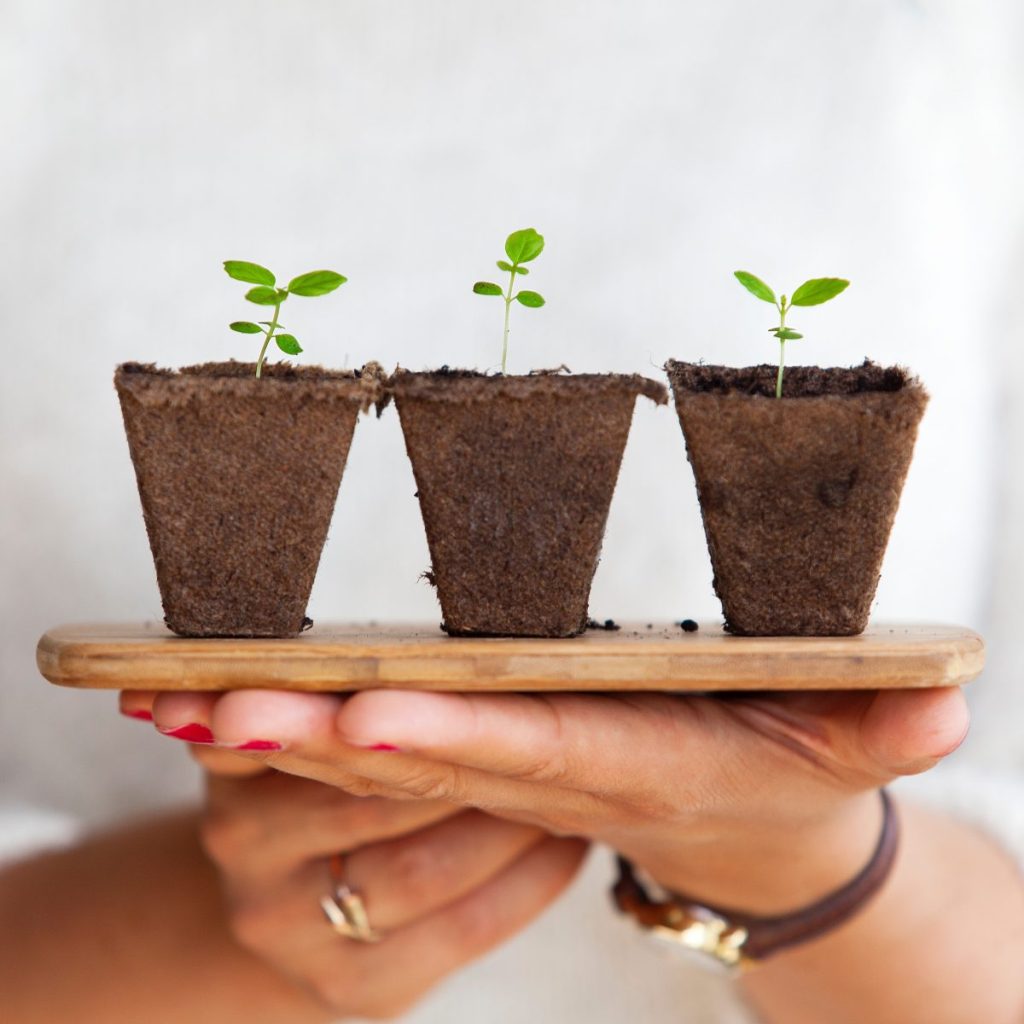
Hariette Henry – Halton Master Gardeners
If you are new to starting seeds and you want them to develop into healthy plants it’s a good idea to start with quality seeds from a reliable seed source. Instructions for what your seeds need to germinate should be on the back of the seed packet. Here are some lists of Canadian seed companies: Seeds of Diversity, Master Gardeners of Ontario Facebook or CBC ‘Canadian Seed Companies‘.

These instructions will often include:
- optimal temperature,
- light requirements,
- seeding depth,
- weeks from sowing to planting
- whether the seed needs cold, moist stratification or scarification.

The following are some of the more common reasons that seeds don’t germinate:
- Seeds that are too old or have been stored incorrectly will have poor germination rates. Check the expiration date on your seed packet. If you’re not sure how old the seed is, you can do a germination test. If the test rate is 70-90%, you should be fine. If it’s lower than 70% it may be best to purchase new seed. Ideally seeds should be stored in cool, dry locations away from direct sunlight and enclosed in packaging that reduces moisture and resists spoilage.
- A common seed killer is dryness. The first step in the germination process is the absorption of water, which causes the seed to swell and germinate. At this time, sees are vulnerable, as they have begun sprouting and will not continue to do so without sustained moisture.
- Some seeds do not like a soggy environment. They need oxygen and, if kept waterlogged or in compacted soil, they may succumb to fungal and bacterial root rots, known as “damping-off”.

- Proper moisture levels are crucial for seed germination. Seeds require adequate moisture to soften the seed coat and begin the germination process. However, excess water can lead to rot or fungal diseases, so it’s important to find the right balance. Using a well-draining seed starting mix can help maintain proper moisture levels.
- Oxygen is also essential for seed germination. Adequate oxygen levels in the soil ensure that the seeds can carry out cellular respiration, which is necessary to provide energy for the germination process. Compacted or waterlogged soils can limit oxygen availability, hindering germination. Proper soil aeration can help mitigate this issue.
- Some seeds have specific germination requirements, such as stratification or scarification, to break dormancy. Understanding these requirements and providing the appropriate treatment can significantly improve germination rates for certain plant species.
The germination process can be further supported through regular monitoring and maintenance of environmental conditions. This includes ensuring the availability of essential nutrients and adjusting factors such as light exposure, temperature, and moisture as needed to promote healthy seedling development.
It is best to start seeds in a medium that is specifically designed for seed starting. Artificial soil-less mixes offer these desired traits. They are usually fine, uniform, well-aerated and loose, and they also have low fertility. They should be free of insects, disease organisms and weed seeds.

For some seeds, certain conditions such as exposure to cold for a specific amount of time (stratification), or abrasion (scarification), or soaking may be needed to break dormancy and sprout. This is the case with many of our native tree and flower species. Read more about this in Breaking Dormancy.
Happy Gardening!

 Halton region Master Gardeners