by Cathy Kavassalis, Halton Master Gardener
Hello Fellow Gardeners,
You hear quite a bit about invasive garden plants in our Master Gardeners of Ontario Facebook forum, and some of you express frustration with this. After all, they include low-maintenance ground covers like Periwinkle, Lily-of-the-Valley, and Bishop’s Goutweed, as well as colourful focal points like vibrant summer Hawkweeds, and autumn stars like Burning Bush.
At first, these guests in our gardens charm everyone, yet they are like guests that refuse to leave, or they leave and take the party far and wide!
Let’s use a pinch of humour and a dose of empathy to address some common questions about invasive plants.
Are all non-native plants “invasive”?

Not all non-native plants are classified as invasive because not all non-native plants spread as quickly or heartily. When you plant invasive plants, it’s like inviting a few fun-loving friends over who then tell their friends, who tell their friends… and suddenly, you’ve got an out-of-control block party on your hands!
Here are the troublemakers that botanists are currently on the watch for:
- Auditor General of Ontario – Value for Money Audit: Management of Invasive Species (2022)
- MidAtlantic Invasive Plant List (2024)
- Credit Valley Conservation Invasive Plant List (2021)
- Ontario Invasive Plant Council Ontario Invasive Species Awareness
Why are we hearing so much about invasive plants?
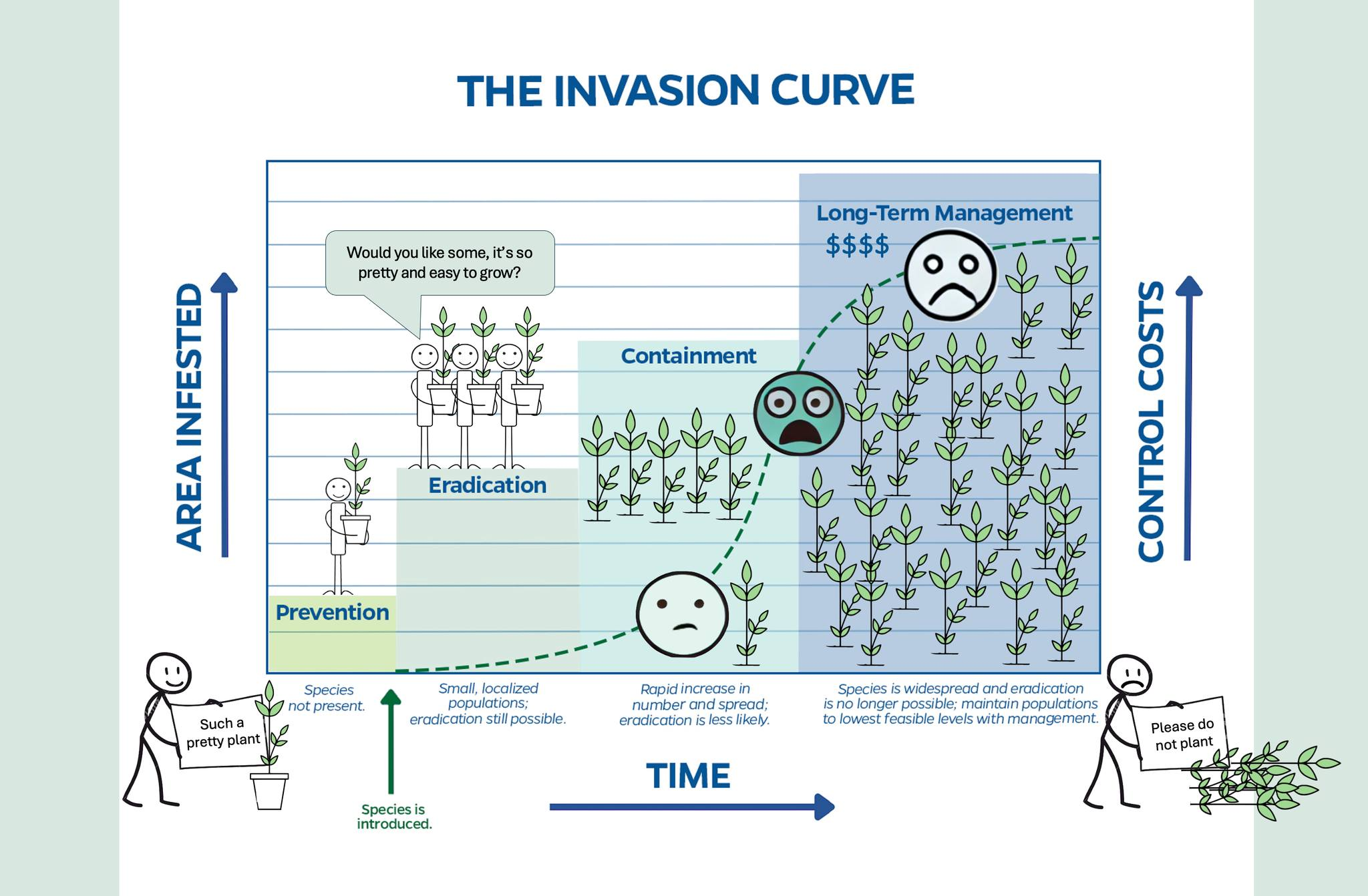
Invasive plants are just now coming to world attention because this block party, which was fun at first, has become dangerous and destructive to the neighbourhood. And like an out-of-control block party, the authorities have had to get involved.
It takes time for invasive plants to spread into natural areas. Now, many have spread into natural areas and can no longer be eradicated or contained, but only managed at great cost.
Haven’t these wildflowers been here long enough to be considered native?
It might seem like they’ve always been around, but they’ve actually been introduced relatively recently in evolutionary terms. By pushing out long-time residents, they are transforming landscapes and disrupting the balance of our local ecosystems.
How can these pretty wildflowers cause harm?
Imagine if you invited a few rabbits to your garden, thinking that they’re cute and harmless, and then wake up to find them devouring everything in sight.
Similarly, these plants have a way of multiplying faster than you can say “botanical takeover,” crowding out the native plants that our local wildlife depends on.

(Images: Periwinkle Infestation – Credit: WNY PRISM; Plants to Avoid – Credit: Clean North)
I see pollinators on them, so what’s the problem?
Yes, pollinators may visit them. Many invasive plants attract generalist pollinators, but offer little for the specialist pollinators who depend on specific native plants and their pollen to thrive.
Each species’ pollen contains distinct proteins, including a variety of essential amino acids, along with sugars, lipids (fats), and vitamins. Similarly, nectars are watery solutions made up of different sugars like fructose, glucose, and sucrose along with traces of proteins, salts, acids, and microorganisms like yeasts.
We don’t know a lot about the impact of invasive plants on the long-term health and diversity of native pollinators. Some invasive plants may be the dietary equivalent of a delicious fries and soda!

Also, some invasive species have lots of flowers, which feed generalist pollinators, including the introduced European honeybee, and boost their population. This changes plant-pollinator interactions within an area by allowing invasive plants to outcompete native plants, and for generalist pollinators to displace specialists. Often both the number and species diversity of native plants and native pollinators fall as a result.
What if they’re not a problem in my yard?
Think of these plants like teenagers with a driver’s license. They might behave while they’re under your watchful eye, but as soon as they get the chance, they’re out exploring new territories without permission! Their seeds can travel far and wide.
What if I keep them carefully controlled?
It’s great that you’re keeping a good eye on them. Still, picture holding a handful of sand. No matter how tightly you grip, some grains will always slip through your fingers. These plants are experts at sneaking out (again, like teenagers) and establishing new colonies in the blink of an eye.
Why do they have to be so pretty?
They absolutely are! Many are the garden’s equivalent of movie stars! But remember, some stars look fabulous on the big screen and wreak havoc behind the scenes.
Our pretty little invaders might be eye-catching, but they’re also the garden’s drama queens, taking up everyone’s energy, and causing a ruckus wherever they go.
What if nothing else will grow?
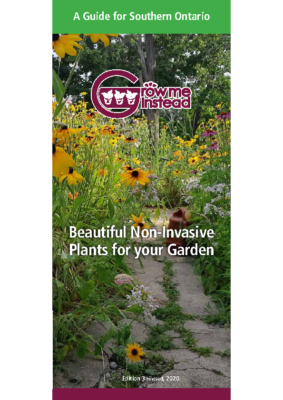
Gardening can feel frustrating when it seems like nothing wants to take root. But, just like in fashion, there are always good-looking alternatives:
- Grow Me Instead
- Native Plants For Pollinators And Beneficial Insects: Great Lakes Region
- Credit Valley Conservation list of plants for rain gardens
Native plants are the timeless classics that never go out of style. Some might take a little more time or care to get started, but once they’re established, they’re hardy, low-maintenance, and beneficial to our local wildlife (again, much like teenagers).
Let’s celebrate the beauty of our gardens by giving the spotlight to our native plants because they play nice with our ecosystems. Planting natives is like having a party that brings a neighbourhood together to make a community.
Together, we can keep our gardens gorgeous and our local flora and fauna thriving!
Happy gardening!
For a deep dive into challenges posed by invasive species, please see
- Canadian Coalition for Invasive Plant Regulation
- IPBES Thematic Assessment Report on Invasive Alien Species and their Control

 Halton region Master Gardeners