Pam MacDonald, Halton Master Gardener
Indoor plants can make beautiful and satisfying additions to your home. They are also, generally speaking, easy to care for. They have limited but specific needs. They require light, moisture, and planting medium in which to grow. Provide what they need and they are likely to continue to please for many years. Despite your best efforts though, you may occasionally encounter a plant disease or insect pest. This guide offers advice on how to avoid, recognize and what to do if you are faced with unexpected pests or disease.
How To Avoid Disease
Healthy plants are less susceptible to disease. To maintain the health of your plants:
- grow them in an appropriate medium for the type of plant
- Learn each of their water and light requirements.
- Consistently provide what they need.
- For example, many houseplants grown for their foliage originate from tropical forests so diffuse, rather than direct sunlight, is best. Cacti, on the other hand, are desert plants and need bright, direct sunlight. Both cacti and succulents thrive in dry environments and like gritty fast draining medium, like sand, to grow in. Other plants may need consistent moisture or require more or less water depending on the season.
Overwatering is frequently the cause of plant health problems. A good rule of thumb for many indoor plants is to use your finger to determine if there is moisture in the soil. If the soil is dry below the surface, it is time to water; if it’s damp, wait a few more days before watering.
Here are some best practices to avoid issues related to pests and disease:

- It is good practice to water from the bottom to ensure all of the potting medium, and not just the top layer, gets water.
- Good air circulation also reduces the chance of infection by removing excess moisture and making it more difficult for fungal spores to settle on leaves.
- Remove plant debris which may harbour fungal spores or pathogens.
- Clean tools with rubbing alcohol after use and between use if working with more than one plant.
- Dispose of old soil when re-potting and clean plant containers with bleach and water before reuse.
Signs Of Disease

What To Do If You Observe Signs Of Disease
Wilting
Plants may wilt in response to lack of water, insufficient light, or outgrowing their container. If any of these environmental problems exist, address them. Wilting can also be an indicator of root rot. The treatment for root rot is covered below.
More rarely, wilting can be a symptom of a soil borne bacterial infection, Ralstonia solanacearum, that will kill the plant. If this is suspected, the plant and soil should be disposed of in the garbage and not in the compost bin. All containers and tools that came in contact with the plant, should be thoroughly cleaned.
Bacterial and Fungal Spots

- Dark spots on the leaves are a symptom of Black spot.
- Orange spots are an indication of Rust.
- Gray, fuzzy spots, are a sign of Gray Mold (Botrytis blight).
- Brown spots with yellowish-orange rings are indicative of bacterial spots.
Remove and dispose of all diseased plant material. Avoid crowding plants or splashing water on foliage. Copper soap or Bacillus amyloliquefaciens spray will reduce the incidence of future disease.
White Powdery Substance
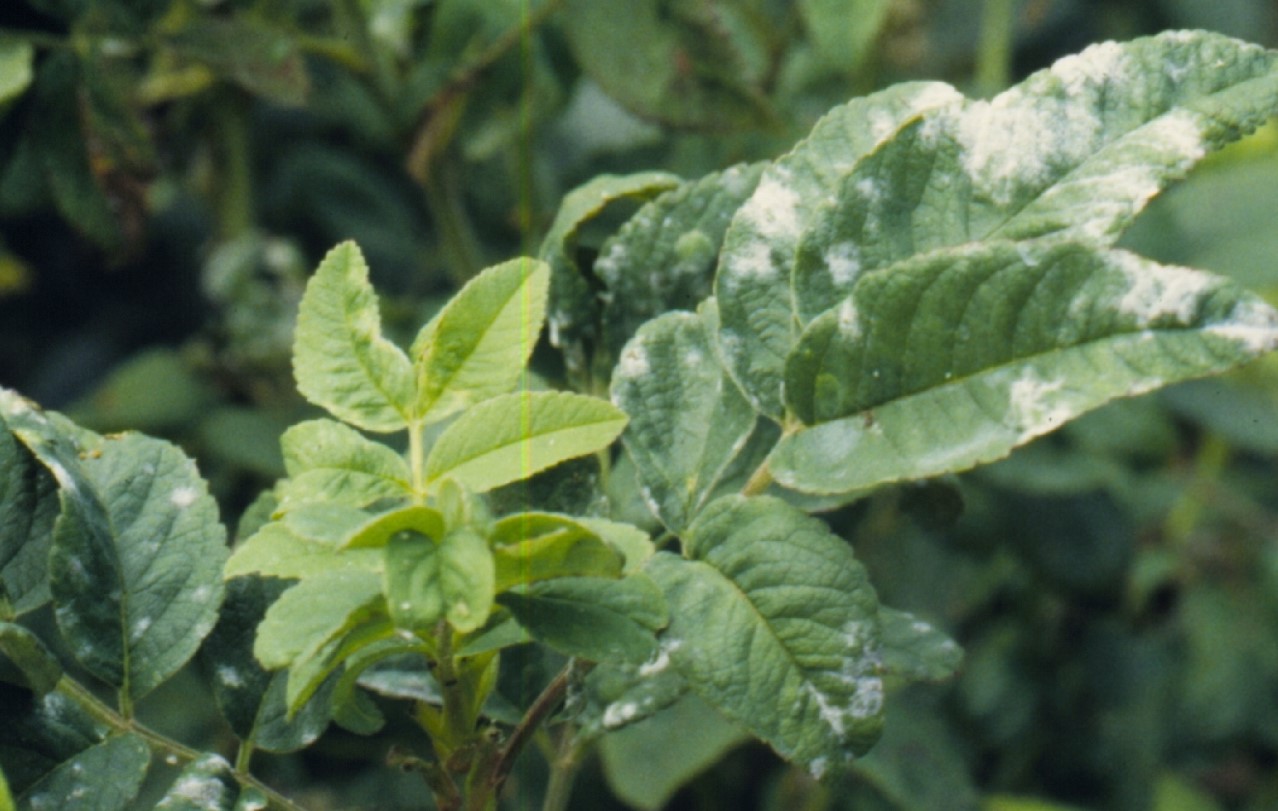
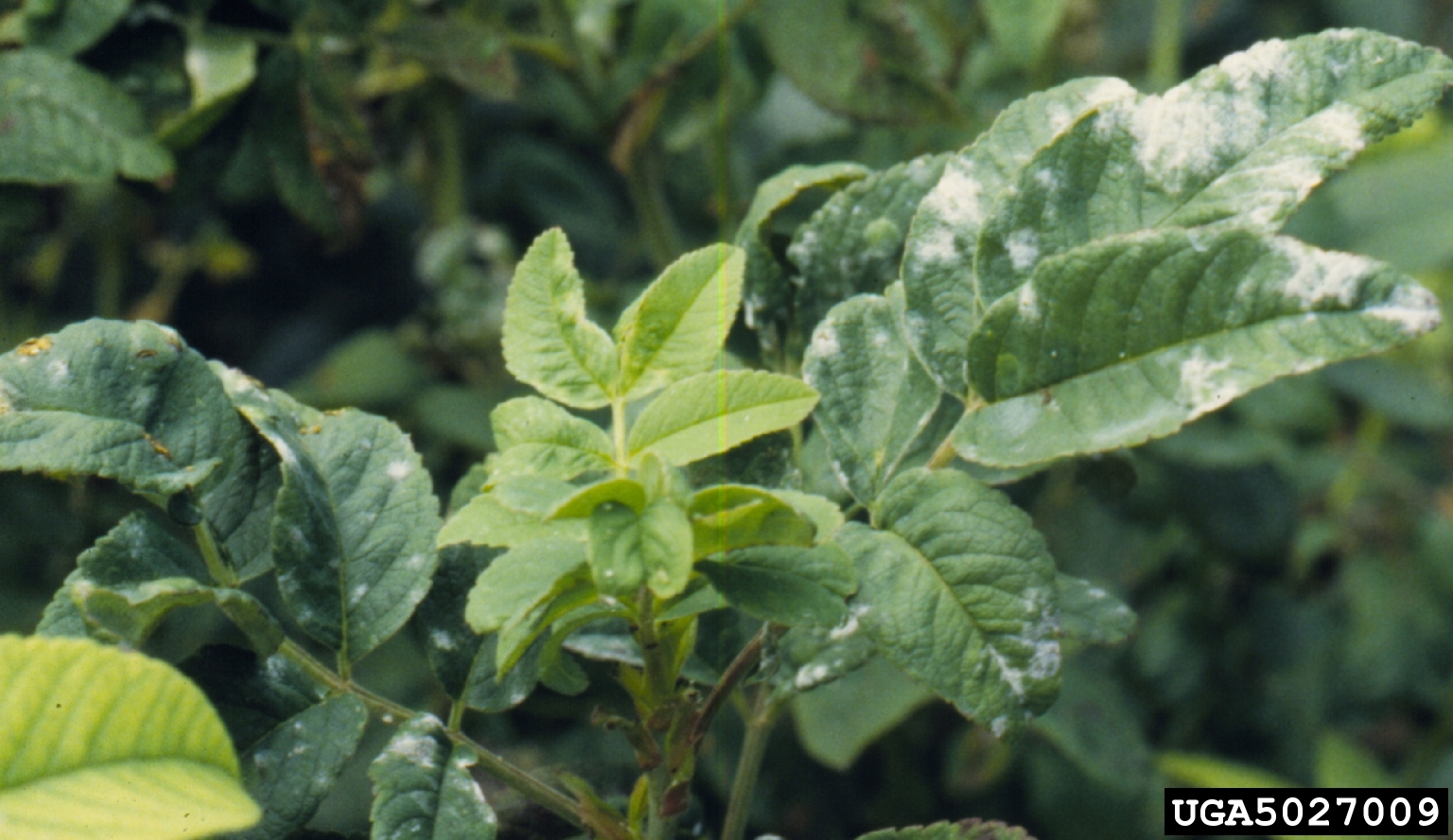
A white, powdery substance on the underside of a leaf, is Powdery mildew, a symptom of several types of fungal infections. It is most likely to arise in cool, damp conditions.
- Isolate the plant, remove and dispose of infected plant parts.
- A solution of baking soda and water (find mixture here) will prevent the fungi that caused the mildew, from establishing itself.
- If the plant is severely infected the best course of action may be to dispose of the plant.
Rotting Leaves

Image: U. of Maryland
Rotting leaves are a symptom of Botrytis blight or Root Rot. Treatment for Botriytis blight is covered under Bacterial and Fungal spots; treatment for Root Rot is covered under blackened roots.
Bad Smelling Soil
Soil that smells bad is a sign the soil is waterlogged, often the result of overwatering. This is a signal to check the roots of the plant for Root Rot.
Blackened Roots
Roots that are turning black are rotting. The treatment is to:
- Take the plant out of its pot.
- Remove as much soil from around the roots as you can manually.
- Rinse the remaining soil away with warm water.
- Dispose of the soil.
- Using clean secateurs, cut back the damaged, rotting or dead roots.
- Disinfect the container.
- Re-pot the plant using fresh potting soil.
Treatment Options
Copper Soap is a fungicide that works by deactivating fungal enzyme systems. It prevents fungal spores from germinating but has no effect on existing fungal diseases. Though it is considered safe for humans, copper is quite caustic if ingested and can cause irritation to the skin and eyes.
Bacillus amyloliquefaciens (BAA ) Spray or Granules is a fungicide containing one of the strains of BAA found in soils throughout the world. It is most commonly used in agriculture and horticulture. Many strains enhance plant growth and inhibit plant pathogens. BAA colonize the roots of plants and inhibit the germination of fungal spores and the growth of fungi. BAA is registered in Canada as a treatment of plant growing media such as potting mixes.
Safer and Bonide as well as several other brands sell products containing copper or BAA and are widely available.
How To Avoid Pest Insects
- Inspect new plants that come into your home for signs of the pests and for the insects themselves.
- Carefully examine the undersides of leaves, along the stems and the soil the plants came in.
- Isolate the new plants from other plants for a few weeks to observe for insects emerging from eggs in the soil.
If there are signs of pest insects on a new plant, the best decision may be to dispose of it. This avoids the risk of the pest spreading to other valued plants or the need to use pesticides that might harm people or pets
Be equally vigilant when bringing plants that have spent the summer outdoors, back into your house. On our website, you will find an excellent article setting out protocols for bringing plants indoors, written by Cathy Kavassilis.
Inspect all indoor plants regularly for signs of pest damage and for insects.
Signs of Pest Damage and Associated Insects

What To Do If You Find Pest Insects
Aphids
Wash leaves with soapy water or wipe them with rubbing alcohol to remove the insects. Aphids can also be sprayed with insecticidal soap.
Spider Mites
Wash mites and webbing off with soapy water. Alternatively, wipe with rubbing alcohol. Mites like warm, dry conditions and often appear when heat comes on in the fall. Mist plants to increase humidity and discourage the mites.

Scale
Scrape scale off by hand or wipe off with a Q-tip soaked in alcohol. Wash the alcohol residue off leaves with soapy water. Horticultural oil applied to the leaves and stems can smother scale insects.
Mealybugs
Wash mealybugs off with soapy water or wipe the leaves with rubbing alcohol to remove the insects. If mealybugs reappear, spray the plant with horticultural oil.
Thrips
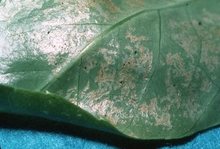
Rinse leaves and stems gently under running water or use a spray bottle of water and a soft rag to spritz and wipe down the leaves. Then spray leaves with organic insecticidal soap or neem oil. It may be necessary to replace the soil to eliminate all larvae and eggs.
Fungus Gnats
Reduce watering to disrupt moist conditions that attract fungus gnats and allow the surface of the soil to dry out between waterings. Covering the soil with decorative sand prevents gnats from laying eggs. It may be necessary to replace the soil to eliminate all larvae and eggs.
Treatment Options
Insecticidal soap, neem oil and horticultural oil are non chemical products that are considered safe for use around humans and animals. When treatment is needed to eliminate an infestation, use them instead of chemical pesticides or insecticides which are toxic. There are numerous brands of these products available.
Bacillus thuringiensis subspecies israelensis (BTI) is a naturally occurring bacterium found in soil that specifically targets and only affects the larvae of the mosquito, blackfly, and fungus gnat. It is also considered non-toxic to humans and animals. There are several BTI products on the market for mosquito control that are also effective for fungus gnats.
Remember, prevention is key to having healthy, beautiful indoor plants. Learning what each of your plants needs, providing them with the right medium to grow in and their preferred amounts of light and water will reduce the chance of disease and make them more resistant to pests. If you do have to treat for pests or diseases, avoid chemical products harmful to the environment and toxic to humans and animals.
More Reading
- University of Maryland Extension Indoor Plant Diseases
- Clemson University Home & Garden Information Center, Houseplant Diseases & Disorders
- University of Arkansas Home Landscaping Resource
- Savvy Gardener Types of houseplant bugs: Who they are and what to do about them
- Missouri Botanical Garden Pesticides
- Gardeners Path Controlling pathogens with BAA

 Halton region Master Gardeners