Janet Mackey discusses soil preparation for gardening, emphasizing the variety of soil products available in Canada, which lack strict labeling regulations. She highlights the ecological importance of peat and explores alternatives like coir. Ultimately, she encourages gardeners to research ingredients and consider more sustainable options when selecting soil for their gardens.
Janet Mackey – Halton Master Gardener
April 27, 2025
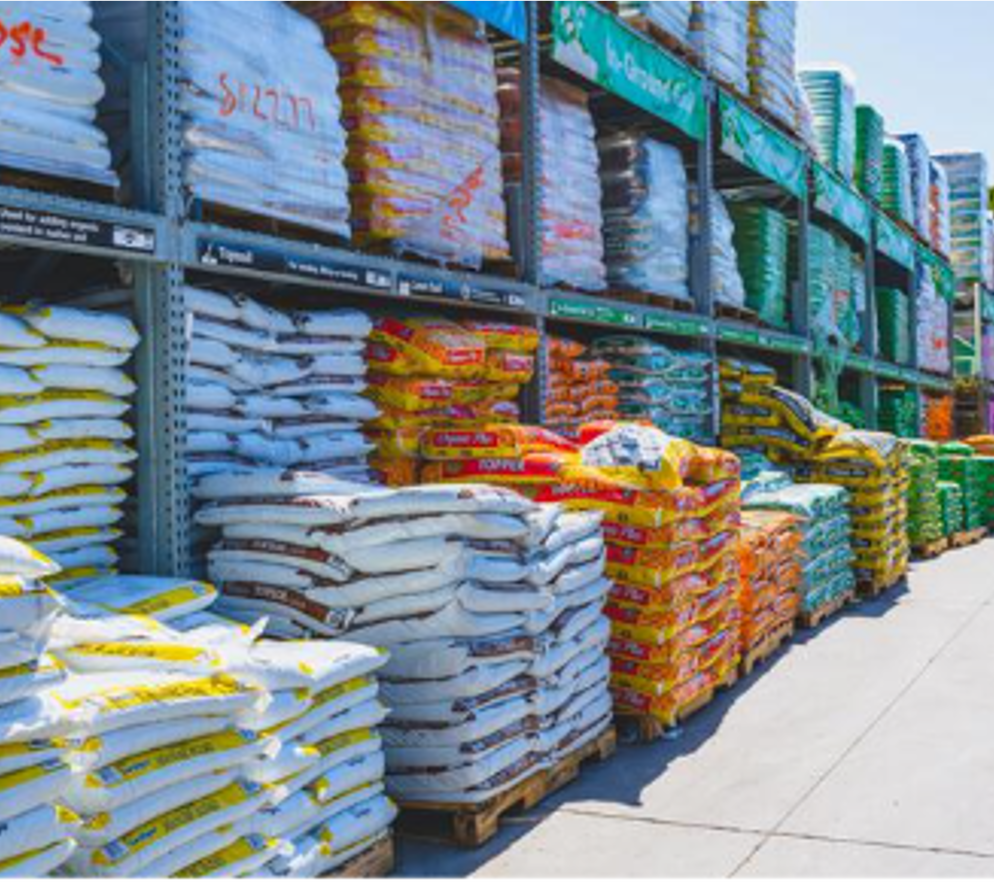
It’s that time of year again when gardeners start preparing their gardens, selecting the best soil for their plants, containers, or turf grass. Walking into the bagged soil section of a large garden centre or big-box store can feel overwhelming, with shelves stacked high with various products, each labeled for specific gardening needs. Some homeowners opt for bulk soil deliveries, whether in large bags or loose piles on the driveway. But how do you know which type of soil is best for your garden or containers? Let’s explore the different types of soil available and what goes into these essential gardening products.
THE BASICS
In Canada, there are no regulations governing the labeling of soil products—meaning garden soil can vary widely from one bag to the next. Some mixes are thick, heavy, and dark (we’ll get into that later), while others are light and fluffy. However, the Canadian government through the Canada Food Inspection Agency, does regulate plant pests, diseases, and the movement of soils to prevent contamination. Commercial soil distributors often, but may not always, pasteurize their products to limit the spread of pests and diseases. To truly understand what you’re buying, it’s essential to dig deeper and examine the ingredients found in commercial soil blends.
Before we dive in, let’s make an important distinction—soil products sold in bags or bulk are not the same as natural soils found in gardens, agricultural fields, or forests. Those are true, living soils, while soil products are formulated mixes designed for specific gardening uses. This article focuses entirely on SOIL PRODUCTS—so what sets soil products and true soils apart? Review the chart below to find out.
SOILS (IN THE GROUND)
SOIL PRODUCTS (SOLD BY RETAILERS)
🦠 biologically active (microbes, fungi etc.)
🦠 little to no biological activity unless there is an ingredient such as compost, manure etc.
🌱 organic (contains the plants and living things that have existed there over time)
🌱 organic (ingredients vary from wood products, compost and manure products)
✨ made up of minerals from Earth’s crust
✨ Inorganic products like vermiculite & perllite are added to improve perosity (see porous)
💧 porous – Up to 50% of the total volume in a good (non-compacted) soil can hold oxygen or water.
💧 porous (levels can vary dependent on the soil product and its ingredients) and has good drainage
🎇matrix (the components of soil are connected into a matrix that functions like an ecosystem)
📤 lightweight (this would be only for products labelled as potting soil, soil media & container soil)
🦟 can contain pests, disease and weed seeds
🦟 relatively pest, disease and weed free because it is usually pasteurized
⚖ pH can vary
⚖ balanced pH
THE DETAILS
PEAT
Peat has been used since the Bronze Age for heating and cooking, and in some regions, it remains a fuel source today. However, its role in horticulture is much more recent, emerging in the early 20th century. Today, peat is a key component in potting soil, triple mix, and occasionally garden soil, and it’s prized for its unique properties. Among them are:
it’s porosity (ability to hold water and oxygen while releasing it to the plants as needed),
being lightweight
effectively reducing compaction
it’s ability to acidify soils
as a relatively stable organic material
comes from Canadian regions.
Scenes from Canada’s Endangered Peatland Ecosystems
Harvesting the peat. Approximately 1 – 2 meters are removed by a type of vacuum .Sphagnum moss, the main ingredient once broken down that makes up peat.SundewplantA glimpse of the peatlands in northern Ontario.
Interest in the ingredients found in soil products containing peat has grown recently, especially since the U.K. phased out peat-based products in 2025 because of almost complete elimination of peat from regions within the U.K. Peat comes from peatlands, which are primarily located in the Northern Hemisphere. Canada—particularly the Hudson Bay Lowlands in northern Ontario—holds an astonishing 25% of the world’s peatlands. These vast landscapes cover 12% of Canada’s landmass, with 87% remaining in their original condition. In contrast, only 10% of peatlands in the U.K. remain intact.
Why does this matter? Peatlands store five times more carbon than all the world’s forests combined—including the Amazon rainforest! Yet, they take nearly a decade to form just one centimeter of peat. Once harvested, peat oxidizes, releasing carbon dioxide, which contributes to soil compaction, subsidence (soil sinking), and thawing permafrost—all of which can accelerate climate change.
Peatlands are climate superheroes. They must be protected, not mined, if Canada hopes to meet its climate targets.
Canadian Parks and Wilderness Society
There is some hope within the peat industry. Canadian companies harvesting peat are committed to peatland restoration efforts, which is uncommon in most other regions. In spite of the industry’s efforts, peat is effectively a non-renewable resource on human time scales. once mined, it won’t regrow in our lifetimes – or even in many generation. For reference it would take about 1000 years to form a meter of peat.
Peatlands are among the most efficient natural carbon storage systems on Earth. Protecting and conserving these ecosystems is critical to mitigating climate change.”
Ducks Unlimited
Horticultural use of peat is just one of several pressures on these critical ecosystems. Forestry and mining also pose significant threats, including large-scale resource extraction projects like Ontario’s Ring of Fire, where mining companies are vying to extract valuable metals.
Athough restoration techniques are improving, it will take decades to centuries before a harvested site regains its full carbon sequestration function. Avoiding disturbance is always preferable.
Are there alternatives to peat? Absolutely—and the options are steadily expanding in both trade and commercial markets to create products with a more sustainable footprint. One of the most widely promoted alternatives is coir, derived from the husks of coconuts, a byproduct of coconut production. Like peat, coir has its advantages and disadvantages.
Coir is made from a waste material during coconut harvests. Image: Kalvariphka
Coir is an organic material that can be processed into coir pith—a fine, peat-like texture available in compact blocks. When immersed in water, these blocks break apart into usable coir pith. Other forms include coir fiber, which consists of durable, stringy strands that resist decomposition but lack absorbency, and coir chips, large porous chunks ideal for aeration.
While coir is a waste byproduct, its journey to the Canadian market is long, as it originates in equatorial regions. Additionally, processing coir comes with environmental considerations. It often contains high levels of salt, requiring freshwater treatment to make it viable for horticulture—a process that can strain clean water supplies in areas with limited resources. There are also concerns about dust generated during fiber processing, which may impact air quality for workers in the industry.
Coir pith – a dense material when wet. It needs to be combined with other materials for good porosity and drainage. Image: WSUCoir Blocks, once immersed in water will create coir pith Image: CoCoir Coir fiber – long-lasting. Used in products such as rope, rugs, bedding. Image: Textile TodayCoir Chips – valued for their porosity. Image: UCONN
Below is a summary of the pros and cons between peat and coir for use in horticulture.
PROS & CONS OF PEAT & COIR
PROS
CONS
Peat/ Sphagnum Moss Based Products
•aerates soil •drains •holds soil moisture •readily available •locally sourced
•acidic •compresses easily •may contain organic matter •low in nutrients •difficult to re-moisten •harvested from unceded lands of First Nations where indigenous rights are still unsettled •takes 1000’s of years to form
Coir Based Products
•aerates soil •drains •neutral pH •holds soil moisture •decomposes slowly •ships compressed •less hydrophobic •higher in P & K •uses waste material •renewable
•possible high salt •low in nutrients •expensive •fresh water used to desalinate •travels great distance •wastewater (retting process) •worker safety
For years, peat and coir have been the primary ingredients in commercial soil mixes available to home gardeners. However, new alternatives are emerging. In southern Ontario, two locally available options are Grow Better (Grow Better Gardens/Grow Bark) and Jocelyn’s Potting Soil (Jocelyn’s Soil Booster). These products incorporate a variety of organic materials, such as compost, manure, and composted wood products. While I haven’t evaluated their effectiveness, it’s encouraging to see innovation in sustainable soil solutions.
OTHER COMMERCIAL SOIL PRODUCTS
Keep in mind—soil products are not subject to labeling regulations. This means it’s up to gardeners to do their research, ensuring they select the right material for their specific needs. To make an informed choice, look for soils that provide a clear ingredient list. Here’s a quick summary of common soil labels.
– traditionaly have contained mostly peat moss, peat humus, limestone, controlled release fertilizer along with perlite/vermiculite and compost/manure -also may contain, coir, sphagnum moss, bark products, styrofoam, water retension crystals, coarse sand, mycorrhizae -newer peat-free mixes may contain composted wood products, manure, compost, Vermicomposted wood chips, cured compost, worm manure, perlite, vermiculite, blood meal, cricket frass, magnesium sulfate (epsom salts). – some mixes are sprayed with a polymer
– these mixes are suitable for planting in containers -Note: There are mixes specifically for starting seeds that have been screened to remove larger pieces to achieve a product with finer particles
Garden Soil
-can contain a wide variety of materials including peat, sawdust, topsoil and pieces of bark
-may be suited to a lawn or garden dependent on the quality of the ingredients -not suitable for a container or raised bed
Triple Mix (TriMix, 3-in-1)
-usually a mixture of 1/3 peat, 1/3 topsoil and 1/3 compost or manure products -sometimes ‘black earth’ (see below) is substituted for topsoil.
– suitable for lawn, gardens -not suitable for containers -may be suitable for raised beds, seeding lawn, improving soil in garden beds
Black Earth (NOTE: This material is extracted from below harvested peat. It is not considered a beneficial soil amendment. It is not the same as chernozem, a rich soil product from the prairies known as black earth)
-material found below the peat in the peatlands (contains no peat) -low in nutrients -may contain a lot of wood products
-not recommended for use on its own -may be acidic -used as a colourant in other soil mixes (see triple mix) Read Black Earth, Not What You Think
Don’t be fooled…dark coloured soil does not necessarily mean better soil
There are some other products that have been used in horticulture but they are not widely available. Check into materials such as rice hulls (in place of perlite) and biochar (studies on this material have not been conclusive).
MAKE YOUR OWN POTTING SOIL
Here are some recipes and considerations when making your own potting mix. The first group of recipes uses COIR and the second uses LEAF MOULD, (a free local material that you can make yourself). Find out how by visiting HERE.
Begin with a few test pots and expand in following years
Experiment with the percentage of each ingredient to get the consistency desired
Re-evaluate your watering routine. These mixes may hold on to water or dry more quickly.
Check the pH and adjust if needed
If you use compost, you may need to boost your plants with some other materials through the season (i.e. vermicompost, bone meal, fish emulsion etc.)



 Halton region Master Gardeners