
Janet Padiak – Halton Master Gardener
June 26, 2025
The Secret to Growing Great Strawberries in Planters and Hanging Baskets
Strawberries are one of the greatest delights for the gardener. Straight from the plant, they are fragrant and luscious. But strawberries are prone to damage from pests—insects, slugs, and foraging wildlife—so what is an organic gardener to do?

Why Choose Hanging Baskets?
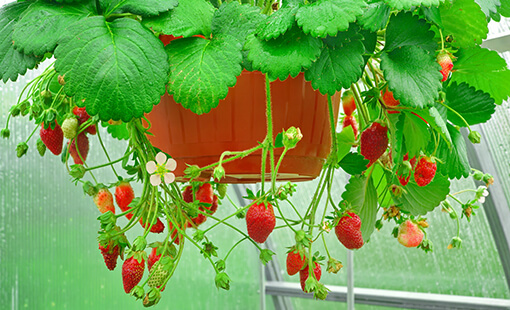
One strategy is to grow the berries in hanging baskets. Benefits include:
- The height of the basket keeps them out of reach of typical pests such as aphids, spider mites and crawling slugs.
- Hanging plants are less accessible to mice, squirrels (usually) and raccoons; the result is that there is minimal loss of ripening berries to these opportunistic foragers.
- There is free air circulation around the plants and this reduces potential for fungal diseases such as anthracnose and botrytis grey mold.
- It is easy to position the baskets in full sun (6–8+ hours per day) to get the best crop.
- Harvesting berries is simple—just reach out your hand to pick.
Basket Size and Setup
These baskets get heavy when saturated and full of berries, so they need to be substantial. Wire baskets hung with metal chains are best; they can be 30 cm (12”) to 40 cm (16”) in diameter and about 20 cm (8”) at their maximum depth. The basket liners should be porous so that excess moisture will drain—strawberries hate wet feet. Coco fiber or burlap works well. Be sure to hang the plants from a bracket or hook that is well-anchored.
How Many Plants per Basket?
- For 30 cm baskets, plan for 4 plants (around the edges).
- For 40 cm baskets, plan for 6–8 plants (5 around the edges and the rest in the middle).
Watering and Feeding
You will find that, during summer’s heat, the baskets will need daily watering if there is no significant rain. When the weather is cooler, every second day is probably sufficient.
To determine when to water:
- Gently lift from the bottom of the basket to feel the weight.
- Use the “finger check”: insert your finger into the soil 3 cm (1”) deep. If your finger is dry at the tip, the planter needs water.
To keep the plant producing big berries all summer, begin fertilizing every 2 weeks in July using a balanced fertilizer such as that formulated for tomatoes.

Managing Runners
The plants will produce runners that will hang beautifully over the edge of the baskets. Leave these runners as they will produce berries, but when the runners produce three and four tiers, clip the bottom runners off to direct the energy into fruit formation.
Soil and Variety Selection
The containers can use any good quality commercial container soil. Choose day-neutral strawberries, which continue to bloom and fruit well into September, rather than June-bearing strawberries, which cease flowering by July.

Growing Strawberries from Seed

One of gardening’s best kept secrets is how easy it is to grow strawberries from seed. Seeds sown in early March (‘Delizz’ is one such variety) will begin to fruit by late June. These plants generally survive the winter and can be used the next year, or new plants can be grown from seed.
Final Tips
While strawberries like free-draining soil, baskets should not dry out. Consistent watering and balanced feeding will ensure vigorous growth and continuous production.
Nothing looks more beautiful than multiple baskets with tiers of strawberries hanging off the sides.
More Info:
Cover Image: Fairacre Farms


 Halton region Master Gardeners