This list has been adapted from Hamilton Pollinator Paradise.
Pollination
When you are creating a pollinator garden, it is helpful to know what pollination and pollinators actually means!
Pollination:
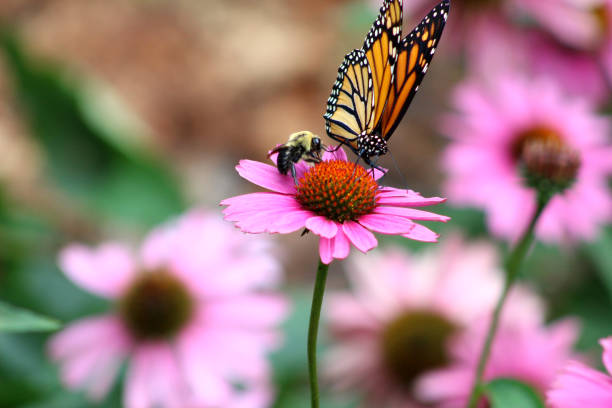
The transfer of pollen between flowers, either carried by the wind or animal/insect pollinators, allows fertilization and encourages reproduction.
Pollen:
A powdery substance in the flower containing the genetic material of the plant for reproduction; also a carb and protein-rich snack for pollinators.
Pollinators:
Insects and animals that move pollen from one plant to another, helping the plant reproduce. Ex. bees, flies, butterflies, moths, bats.
Nectar:
A sugary liquid made in the flowers to attract pollinators; a reward for helping move pollen!
Keystone, Native & Invasive Plants
In order to support pollinators with a pollinator garden, it is important to understand the differences between native, non-native, and invasive plants as well as cultivars or ‘nativars’. What we plant matters.
Keystone Plants
Keystone native plants play a critical role in their ecosystems, acting as essential support systems for biodiversity. These plants provide food, shelter, and habitat for a vast range of insects, birds, and animals, ensuring healthy populations and balanced ecosystems. Losing keystone plants can trigger a ripple effect, leading to declining insect numbers, fewer pollinators, and reduced food sources for wildlife, ultimately disrupting the food web.
Native vs. Invasive Plants:
In order to support pollinators with a pollinator garden, it is important to understand the differences between native, non-native, and invasive plants as well as cultivars or ‘nativars’. What we plant matters.
Native:
Plants that have evolved and adapted to a specific area or geographic region’s local climate, soil, and weather conditions over thousands of years, without human introduction, and have co-evolved relationships with native animals, insects, and other plants.
Non-native:
Plants that are introduced to an area by humans and are not native to that region.
Invasive:
Plants that are non-native and cause harm to the environment, economy, and/or society and human health.
- Not all non-native plants are invasive, but all invasive plants are non-native.
- Similarly, native plants can grow aggressively but are not considered invasive.
Cultivar:
A plant that has been bred for specific characteristics, like flower shape or leaf colour, and is often given a ‘variety’ name. Cultivars of native plants (nativars) look nice to people but may lose their benefit for pollinators. Ex. Common Ninebark “Amber Jubilee” (Physocarpus opulifolius).
Weed:
Plants that are undesirable in a particular situation – ‘weeds’ are subjective because a plant can be a weed in one context but not in another. Native plants have often been considered weeds, when in fact they are vital for our environment!
Plant Names
Plants are called by many names which can make shopping tricky, but knowing the plant’s “full name” will ensure you get the plant you want.
Common Name:
The name or names a plant is known by; the same name can be shared by many different plants; like nicknames.
Scientific/Botanical Name:
The internationally recognized Latin name of a plant (genus and species); there is only one scientific name per species. Use the scientific name when you’re shopping to ensure you get the right plant; like a legal name.
Genus:
A group of related species; like a last name.
Species:
One species of the genus; like a first name.
Plant Life Cycles
Like all living things, plants have a lifespan. Some species will only last for the summer, while others can return on their own year after year. If you don’t want to replant your flower garden every year, perennial plants are the way to go – bonus: most native plant species are perennials.
Annual:
A plant that completes its entire lifecycle (sprouts, flowers, produces seeds, dies) in one year or less and will need to be re-planted each year.
Biennial:
A plant that completes its entire lifecycle in two years, usually producing leaves and roots in year one, then flowers and seeds in year two.
Perennial:
A plant that grows and flowers for years – can be evergreen or die back in the winter and regrow in the spring each year.
Sun Exposure
Different plant species need different levels of light to grow. Knowing how much light your garden receives will help you pick the right plants for that space.
Full Sun:
Six (6) or more hours of direct sunlight per day during the growing season.
Full Sun/Part Shade:
Three to six (3-6 hours) of direct sunlight per day during the growing season; can usually tolerate full sun.
Full Shade:
Less than three (3) hours of dappled sunlight per day, with additional indirect or filtered sunlight throughout the day; dappled shade is spots of sunlight and shade created by light filtering through the canopy.
Soil Texture
Soil is composed of three types of particles – sand, silt, and clay – plus organic matter. Most soils are a combination of all three, and the soil texture depends on how much of each particle is in that soil. Most native plants can tolerate a variety of soil types as long as the area is well-draining (i.e. no standing water).
Sand:
Relatively large soil particles (2.0 – 0.05 mm) that feel gritty; allows water and nutrients to move through quickly.
Silt:
Medium sized soil particles (0.05 – 0.002 mm) that feel flour-like when dry; allows water and nutrients to move through moderately.
Clay:
Tiny particles (<0.002 mm) that feel sticky when wet; water and nutrients move through very slowly.
Loam:
A well-balanced mix of sand, silt, and clay that has good moisture retention and drainage.
Soilless Mix/Potting Soil:
A mix of substrates like perlite, vermiculite, compost, sand, bark, etc., that are used to grow plants in containers instead of soil. Good for starting seeds but need fertilizer long-term.
Soil Moisture
Plants need water but how much varies by species. If there is too much water in the soil for the plant, it’s roots will rot and the plant will die. The soil moisture levels below describe how much water is in the soil at any given point. Make sure the plants you choose will like the moisture level of your soil.
Wet:
Soggy or marshy most of the year.
Medium-Wet:
Excessively wet in winter, spring, after heavy rain, but often dries in summer.
Medium (Mesic):
Average garden soil; water soaks in with no run-off.
Medium-Dry:
Well drained soil; water is removed from soil readily, but not rapidly.
Xeric:
Excessively drained.
Sustainable Gardening
Sustainable gardening practices are those that support the long-term health of the soil, plants, and the ecosystem as a whole, without compromising future generations’ ability to do the same. They may include: using compost and other organic matter to enrich the soil; avoiding synthetic pesticides and fertilizers, which can harm the environment; conserving water through efficient irrigation techniques; promoting biodiversity by planting a variety of plants and attracting beneficial insects; reducing food waste by composting or using excess produce.
Biodiversity:
is the variety of all living organisms on Earth, including their genes, species, and the ecosystems they form. It encompasses everything from soil microbes and plants to animals and entire habitats, all interacting in complex ways. These interactions support essential life functions, and changes at one level can affect the whole system.
Ecosystem:
is a system where living things like plants, animals, and microbes interact with non-living elements like soil, water, air, and sunlight. These parts work together in a balanced way to support life. Ecosystems can be large, like forests and lakes, or small, like a garden bed or a patch of soil — but in all cases, every part depends on the others to stay healthy and functional.
Starting Seeds
Germination:
When a seed sprouts and starts to grow.
Stratification:
The process of pre-treating seeds with cold temperatures to simulate winter conditions.
Scarification:
To scratch or break the hard coat of some seeds with sandpaper or soaking in water before planting.
Direct Sow:
Seeds are planted directly into the soil outside where you want them to grow.
Potting Up:
The process of moving a plant ‘up’ to a larger pot size.
Transplant:
The process of relocating a plant from one place to another in the garden.
Other Helpful Terms
Deadheading:
To remove the dead or dying flowers from a plant; to encourage more blooms, prolong the bloom period, prevent self-seeding, or to make it aesthetically appealing. If you want to collect and save seeds from your plant, skip the dead heading!
Groundcover:
Low-growing plants that spread to cover the soil surface, suppressing weed growth, preventing erosion, retaining moisture, and filling in the empty spaces of the garden.
Hardscape:
Any garden feature that is not a plant ex. bench, fence, birdbath.
Mulch:
Any organic material, such as wood chips, grass clippings, compost, straw, or leaves that is spread over the soil surface (around plants) to hold in moisture, help control weeds, and insulate the ground in winter.
Pruning:
The process of cutting off a limited amount of leaves or branches to remove dead or diseased parts, or to control and direct the plant’s growth.
Rhizome:
A creeping stem which produces small plantlets along its length.
Runner:
A creeping stem which produces small plantlets along its length.
Seedhead:
A part of the plant that contains seeds after the flowers and fruits are gone.
Self-seeding:
Some plants will readily shed their seeds in the immediate area and those seeds will germinate to make more plants. If you want more of that plant, self-seeding is good. If you don’t want more of that plant, make sure to deadhead the flowers before they go to seed.


 Halton region Master Gardeners