

Brenda Van Ryswyk
Originally published in Cross Pollination, October 2021
Collecting Native Seeds
Fall is a good time to collect native plant seeds, but careful collection is important. Seeds need to be fully ripe, enough should always be left behind for wildlife and natural regeneration, and collected seed should be handled in a way that protects its viability.
How Much Seed Should You Collect?
If you are collecting from your own garden, you can take what you need, but it is always a good idea to leave some seed for birds and other wildlife to eat over the winter, as well as enough for plants to reseed naturally.
When collecting from a native wild population, never collect more than 10% of the available seed.
If you are collecting from a planted or restored site and the seed will be used for further restoration, more can be collected, but no more than 50%. Enough seed should always remain to allow the site to reseed naturally and to provide food for wildlife.

When to Collect
Collect seeds only after they are fully ripe.
Wait until the stems and seed heads have turned brown and dry. Some species, particularly many of our native grasses and mountain mints, are best collected after a hard frost.
Ripe seeds should fall out or release from the seed head easily. They should have no green remaining and should feel fully hard and dry. Most ripe seeds are dark brown or black, although some species produce light brown or white seed.
Document Your Collection
Always keep track of the species, location and year of collection.
Write this information directly on the paper collection bag or on a piece of paper kept with the seeds.
Whenever possible, keep collected seed within its local geographic range. Seed from Windsor, for example, may not be well suited to growing conditions in Kingston. Strive to collect and share seed as locally as possible.
Brenda’s Collection Methods
The best collection method depends on the type of seed and the species being collected.
Try to collect only one species at a time and avoid mixing species unless you specifically want a mixture for reseeding a restoration site.
It is best to collect after several dry days so the seed heads are completely dry. Wet seed heads do not release their seeds easily.
A clean bucket or paper bag works well for many species. Brenda often holds a seed head over the bucket or bag and gives it a good shake.
A hard-sided bucket works particularly well for Monarda and mountain mints, which have fairly hard seed heads containing small seeds inside small tubes.
For fluffy seeds such as asters and goldenrods, shake the seed heads into a bucket or bag. Another effective method is to place a bag over the flower head, hold the stems with one hand and flick the portion inside the bag with a finger.

Fluffy seed should be thoroughly dry before it is collected.
Sometimes asters are easiest to collect by hand, plucking individual seed heads one at a time. This is useful when several asters are growing together and you want to be certain you are collecting only one species.
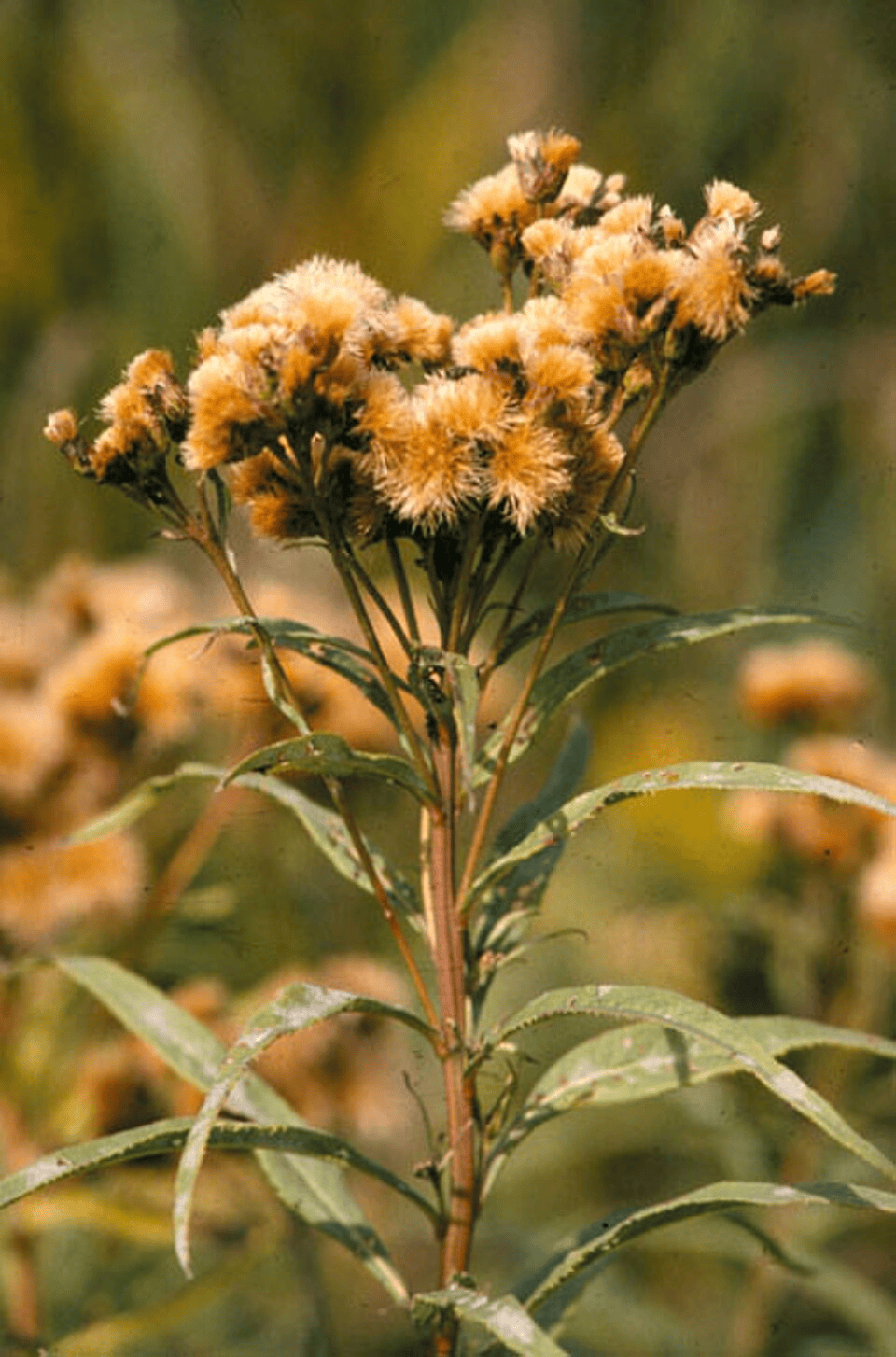
Brenda finds this method especially useful for New England aster, which can sometimes hold onto its seed. Its dense flower heads also make it possible to collect quite a few seeds with each pick.
Careful collection has another advantage: there will usually be less chaff mixed in with the seed.
Some species require a different approach. With Echinacea, for example, you may need to clip the entire seed head and later break it apart to remove the seeds.
After Collection
Whenever possible, collect seed directly into paper bags. If you collect into a bucket, transfer the seed to a paper bag as soon as possible.
Paper allows air to circulate and lets seeds continue to dry after harvest. Seed stored in plastic can remain damp, which may cause it to rot or reduce its viability.
If seed is moist when collected, spread it in a thin layer on cardboard or newspaper for at least a few days and allow it to dry thoroughly before storing it.
Fall is the time to collect native seeds, but remember to leave plenty behind. Standing seed heads help plants reseed for next year and provide an important food source for birds and other wildlife.
Next: Cleaning and Storage of Seeds
Continue with Part 2: Cleaning and Storage of Seeds
(coming soon)
About Brenda Van Ryswyk
Brenda Van Ryswyk grew up in the rural areas south of Ottawa and is a Natural Heritage Ecologist with more than 15 years of experience. Her work has included plant and wildlife inventories, which are a natural fit for her love of the outdoors.
Also an avid gardener, Brenda promotes the idea that backyard landscaping can be both functional — benefiting local wildlife — and beautiful. A home landscape can still have a traditional look while incorporating native plants.
A self-described research junkie, Brenda enjoys sharing what she has learned and encouraging others to do what they can to help local bees, butterflies and other wildlife.
Cover Image: Wikimedia Commons – hedera.baltica

